
More Information
Submitted: November 03, 2026 | Accepted: November 06, 2026 | Published: November 09, 2026
Citation: Rosas-Peralta M, Palomo-Piñón S, Alcocer L, Galván-Oseguera H, Álvarez-López H, Diaz ED, et al. Beyond Mineralocorticoid Receptor Blockade: Aldosterone Synthase Inhibition as a New Therapeutic Frontier in the Cardiovascular–Kidney–Metabolic Era-What is really new? Ann Clin Hypertens. 2026; 10(1): 52-0. Available from: https://dx.doi.org/10.29328/journal.ach.1001047. Available from:
https://dx.doi.org/10.29328/journal.ach.1001044.
DOI: 10.29328/journal.ach.1001044
Copyright license: © 2026 Rosas-Peralta M, et al. This is an open access article distributed under the Creative Commons Attribution License, which permits unrestricted use, distribution, and reproduction in any medium, provided the original work is properly cited.
Keywords: Aldosterone synthase; CYP11B2; Baxdrostat; Lorundrostat; Uncontrolled hypertension; Resistant hypertension; Mineralocorticoid receptor antagonists; Cardiovascular–kidney–metabolic syndrome; Obesity; Chronic kidney disease. Mexico; ENSANUT; Treatment gap; Population health impact

Beyond Mineralocorticoid Receptor Blockade: Aldosterone Synthase Inhibition as a New Therapeutic Frontier in the Cardiovascular–Kidney–Metabolic Era-What is really new?
Martin Rosas-Peralta* Silvia Palomo-Piñón, Luis Alcocer, Héctor Galván-Oseguera, Adolfo Chávez-Mendoza, Ernesto Cardona-Muñoz, Humberto Álvarez-López, J Manuel Enciso-Muñoz, Enrique Díaz-Díaz and GREHTA Group
Group of Experts in Hypertension, México
*Corresponding author: Martin Rosas-Peralta, MD, PhD, Group of Experts in Hypertension, México, Email: [email protected]
Aldosterone dysregulation links persistent hypertension with sodium retention, inflammation, fibrosis, and cardiovascular–kidney–metabolic (CKM) injury. This narrative review examines traditional mineralocorticoid receptor antagonists (spironolactone, eplerenone, and finerenone) alongside selective aldosterone synthase inhibitors (ASIs) targeting CYP11B2. Focused literature searches and trial-registry review through November 5, 2026 informed a critical synthesis of pharmacology, phase 2 and phase 3 antihypertensive trials, chronic kidney disease studies, safety, and clinical positioning. Randomized trials show additional blood-pressure lowering with baxdrostat and lorundrostat, while the negative primary endpoint of HALO cautions against unqualified extrapolation. Early studies suggest reductions in albuminuria when ASIs are used with guideline-directed kidney therapy, including sodium–glucose cotransporter-2 inhibitors, but durable cardiorenal outcome benefits and comparative superiority over mineralocorticoid receptor antagonists remain unproven. Suspected primary aldosteronism requires appropriate biochemical evaluation before starting agents that may alter aldosterone and renin measurements. In Mexico, the substantial burden of uncontrolled hypertension underscores the need for validated patient selection, electrolyte monitoring, equitable access, and implementation research. Selective CYP11B2 inhibition expands therapeutic options in uncontrolled and resistant hypertension without displacing established receptor-antagonist indications or proven CKM care.
An endocrine explanation for persistent hypertension
Hypertension management has advanced through increasingly effective combinations of renin–angiotensin system inhibitors, calcium-channel blockers, and thiazide or thiazide-like diuretics. Yet treatment targets remain elusive for many patients. The problem extends well beyond traditionally defined resistant hypertension: individuals receiving two agents, or receiving three drugs without a fully optimized regimen, also face ongoing cardiovascular exposure. The clinical question is not simply which fourth drug to add, but whether a persistent biological pathway has been insufficiently treated [1,2].
The American Heart Association CKM framework recognizes the interaction of excess adiposity, dysglycemia, kidney dysfunction, and cardiovascular disease as an interconnected progression rather than separate disorders. Aldosterone is a plausible mechanistic bridge. Its dysregulation contributes to renal sodium retention and vascular injury; obesity and sleep-disordered breathing can amplify aldosterone-related signaling, while kidney dysfunction magnifies salt sensitivity and makes treatment more challenging [1-3].
For decades, clinicians have interrupted this pathway at the mineralocorticoid receptor (MR). Spironolactone remains one of the most potent evidence-supported drugs for resistant hypertension, while eplerenone provides a more selective steroidal alternative. Finerenone has transformed the concept of receptor blockade by demonstrating kidney and heart-failure benefits in rigorously selected populations. Emerging selective ASIs offer a complementary proposition: rather than competing with aldosterone at its receptor, they inhibit its terminal biosynthetic enzyme [4-7].
This review evaluates whether that upstream intervention is genuinely preferable, for whom it may matter, and which assumptions still require definitive clinical validation. The emphasis is deliberately broader than resistant hypertension alone and includes patients with inadequately controlled blood pressure in the heterogeneous CKM continuum (Figure 1).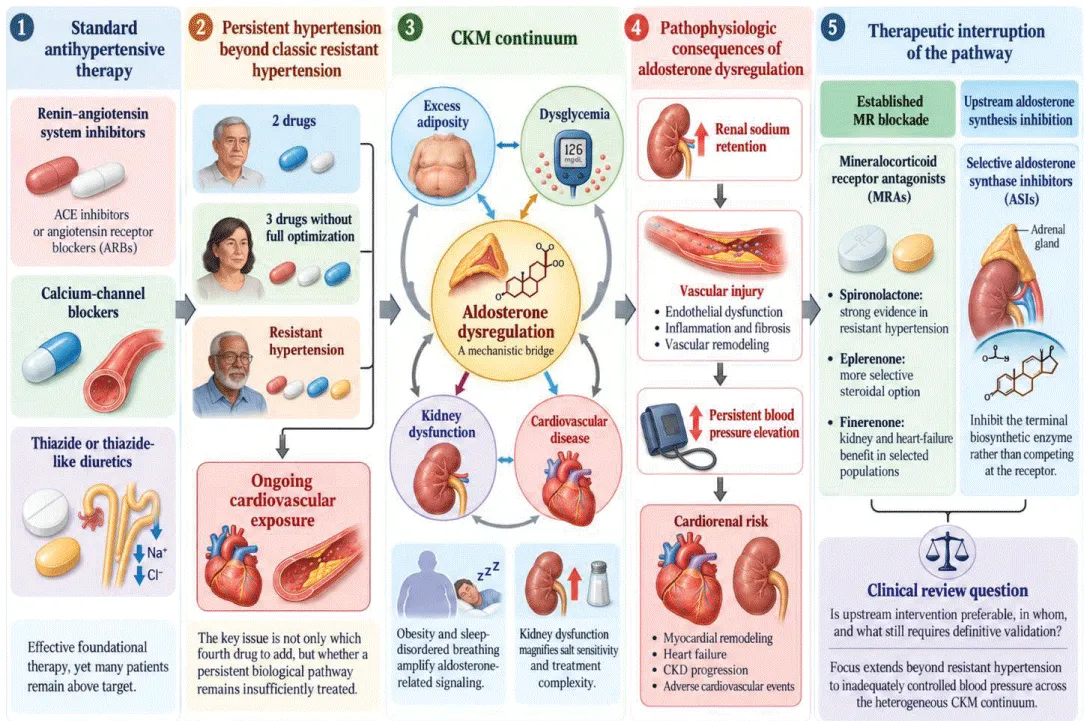
Figure 1: Persistent Hypertension in the Cardiovascular–Kidney–Metabolic Continuum: An Endocrine Rationale for Aldosterone-Targeted Therapy. Abbrevations: CKM: Cardiovascular Kidney Metabolic; MR: Mineralocorticoid Receptor; MRA: Mineralocorticoid Receptor Antagonists; ASI: Aldosterone Synthase Inhibitors.
For this revision, focused, non-systematic searches were undertaken in PubMed/MEDLINE and ClinicalTrials.gov for English- or Spanish-language records from January 1, 2010 through November 5, 2026; journal publisher websites, the Endocrine Society guideline repository, and cited reference lists were also examined. Search concepts included “aldosterone synthase inhibitor” OR “CYP11B2” OR “baxdrostat” OR “lorundrostat” OR “vicadrostat” OR “BI 690517” OR “LCI699” OR “osilodrostat,” combined with “hypertension,” “resistant hypertension,” “primary aldosteronism,” “chronic kidney disease,” “albuminuria,” “SGLT2 inhibitor,” “randomized trial,” or “cardiovascular outcomes.” Trial names (BrigHTN, HALO, Target-HTN, Explore-CKD) and NCT identifiers were also searched directly.
Eligible evidence comprised clinical phase 2 or 3 randomized trials, pivotal earlier human proof-of-concept studies relevant to CYP11B2/CYP11B1 selectivity, peer-reviewed systematic reviews and meta-analyses, authoritative clinical practice guidelines, population-based Mexican epidemiological studies and official national sources, and trial registrations relevant to CKM phenotypes or clinical outcomes. Preference was given to full peer-reviewed reports and original registry records; conference presentations or professional trial summaries were used only when a full peer-reviewed report was not identifiable and were labelled accordingly. Preclinical-only reports, duplicate publications, and unverified promotional efficacy claims were not used as principal clinical evidence. Citations were identified by targeted keyword searches and backward reference screening, then selected for clinical relevance, study design, available endpoint data, and limitations; there was no predefined quantitative synthesis or independent duplicate screening.
The SANRA framework informed editorial appraisal of the review’s significance, aims, search transparency, referencing, evidence level, and presentation of endpoints; a formal independently scored SANRA assessment was not performed. This is a narrative synthesis, not a systematic review or meta-analysis, and its non-exhaustive search is an acknowledged limitation [8].
This figure illustrates the central role of aldosterone dysregulation in persistent hypertension across the cardiovascular–kidney–metabolic (CKM) continuum. Despite standard antihypertensive treatment with renin–angiotensin system inhibitors, calcium-channel blockers, and thiazide or thiazide-like diuretics, blood pressure may remain inadequately controlled, even before conventional criteria for resistant hypertension are fulfilled. Excess adiposity, dysglycemia, kidney dysfunction, and cardiovascular disease interact bidirectionally, promoting aldosterone-related signaling, sodium retention, endothelial dysfunction, vascular inflammation, fibrosis, and progressive cardiorenal injury. Two complementary therapeutic strategies are highlighted: mineralocorticoid receptor antagonists (MRAs), including spironolactone, eplerenone, and finerenone, which block receptor-mediated effects; and selective aldosterone synthase inhibitors (ASIs), which target CYP11B2 to suppress aldosterone biosynthesis. Although ASIs offer a promising upstream therapeutic approach, their comparative superiority over MRAs in preventing cardiovascular and renal outcomes remains to be established. The figure emphasizes the potential importance of targeting aldosterone dysregulation beyond resistant hypertension, particularly in patients with inadequately controlled blood pressure and coexisting CKM abnormalities. Abbreviations: ASI, aldosterone synthase inhibitor; CKM, cardiovascular–kidney–metabolic; CYP11B2, aldosterone synthase; MR, mineralocorticoid receptor; MRA, mineralocorticoid receptor antagonist.
From adrenal synthesis to systemic CKM injury
Aldosterone is generated in the adrenal zona glomerulosa from steroid precursors, with aldosterone synthase, encoded by CYP11B2, catalyzing the terminal biosynthetic steps. Regulation reflects angiotensin II, extracellular potassium, and local adrenal inputs. Under physiological conditions, aldosterone preserves circulating volume and potassium balance. In pathological settings, inappropriate secretion relative to sodium intake and physiological requirements becomes maladaptive [2,4].
Classical renal MR activation increases epithelial sodium-channel activity and sodium reabsorption in aldosterone-sensitive distal nephron segments, expanding extracellular volume and promoting potassium excretion. In the heart and vasculature, sustained mineralocorticoid signaling contributes to oxidative stress, endothelial dysfunction, inflammation, stiffness, and extracellular-matrix remodeling. These effects create a plausible substrate for left ventricular hypertrophy, arterial rigidity, atrial remodeling, and progressive kidney damage [2,4].
Adipose tissue is more than an inert storage depot. Visceral adiposity alters the renin–angiotensin–aldosterone system through neurohormonal activity, adipokine pathways, systemic inflammation, and altered renal hemodynamics. Obstructive sleep apnea and high dietary sodium may intensify the hypertensive phenotype. In diabetes and metabolic dysfunction-associated steatotic liver disease (MASLD), insulin resistance, dyslipidemia, endothelial impairment, and inflammation create overlapping biological vulnerabilities. Association should not be confused with proof that CYP11B2 inhibition reverses each component of this network [2,3].
An additional conceptual distinction matters. MR antagonism blocks many genomic consequences of receptor activation, including receptor activation by glucocorticoids in tissues with inadequate prereceptor protection. ASIs lower aldosterone itself and might attenuate aldosterone-associated rapid or MR-independent signaling; however, they do not necessarily block cortisol-driven MR activation. Therefore, neither modality fully subsumes the other, and the phrase “complete aldosterone-axis blockade” is mechanistically misleading [4].
Traditional MR blockade: successes that must not be forgotten
The landmark PATHWAY-2 randomized crossover study established spironolactone as a highly effective add-on treatment in carefully defined drug-resistant hypertension, outperforming bisoprolol and doxazosin on home systolic blood pressure. This finding supported the concept that excess sodium retention is a key determinant of the resistant phenotype. It remains a landmark trial against which newer agents must be assessed, notwithstanding the limitations inherent in comparisons across different trials and populations [5].
Spironolactone is relatively inexpensive and familiar, but steroidal cross-reactivity at androgen and progesterone receptors can cause gynecomastia, sexual symptoms, and menstrual disturbances. Hyperkalemia and changes in kidney function can restrict treatment, particularly with concurrent renin–angiotensin blockade or advanced CKD. Eplerenone improves endocrine selectivity but may require twice-daily use and can still produce hyperkalemia. Clinical decisions should consider the different evidence bases and drug-specific pharmacokinetic features rather than treating these agents as interchangeable [4,5].
Finerenone provides an essential counterargument to unqualified ASI superiority. Unlike predominantly blood-pressure-focused ASI trials, finerenone has randomized outcome evidence in diabetic kidney disease and in heart failure with mildly reduced or preserved ejection fraction. In FIDELIO-DKD, finerenone improved a kidney composite outcome in patients with CKD and type 2 diabetes; in FINEARTS-HF, the rate ratio for total worsening heart-failure events and cardiovascular death was 0.84. These outcomes cannot be automatically attributed to blood-pressure lowering and cannot be assumed for ASIs [6,7].
Traditional receptor blockade therefore retains at least three strengths: a mature antihypertensive evidence base, established cardiorenal outcomes in specific phenotypes, and extensive practical experience. Its weaknesses—hormonal intolerance for spironolactone, potassium-related constraints across the class, and incomplete interruption of circulating aldosterone—motivate development of upstream approaches rather than invalidate MRAs (Table 1).
| Table 1: Pharmacological comparison of aldosterone pathway strategies | |||
| Feature | Spironolactone / eplerenone | Finerenone | Selective CYP11B2 inhibitors |
| Primary target | Steroidal MR antagonism | Nonsteroidal MR antagonism | Aldosterone biosynthesis (upstream) |
| Aldosterone concentration | Not necessarily reduced; may rise | Not necessarily reduced; may rise | Reduced by CYP11B2 inhibition |
| Hormonal adverse effects | Spironolactone: antiandrogen/progestogenic | Less steroid receptor cross-reactivity | No direct steroid receptor blockade expected |
| Evidence in hypertension | Strong: PATHWAY-2 for spironolactone | Not preferred solely for BP control | Phase 3 placebo-controlled efficacy |
| Hard CKM outcomes | Indication-specific MRA evidence | Kidney/heart-failure outcome trials | Not yet established to the same extent |
| Main monitoring | Potassium, renal function | Potassium, renal function | Potassium, sodium, renal function |
| Comparative superiority | Reference standard in resistant HTN | Organ-protective indications | Head-to-head superiority not established |
Selective CYP11B2 inhibition: what is genuinely new?
An ASI interferes with CYP11B2-mediated synthesis, lowering circulating aldosterone output. This represents a different pharmacological location from receptor antagonism. Older strategies encountered difficulty because aldosterone synthase shares substantial homology with CYP11B1, an enzyme crucial for cortisol production. The major promise of modern selective molecules is a clinically useful separation between aldosterone suppression and cortisol synthesis [4,9].
Historical non-selective aldosterone synthase inhibition helps explain the importance of modern molecular selectivity. LCI699 (later developed as osilodrostat) inhibited aldosterone biosynthesis but also inhibited CYP11B1, reflecting the high homology between the aldosterone and cortisol synthetic enzymes. In an 8-week, 524-patient phase 2 hypertension study, LCI699 lowered blood pressure, but approximately one-fifth of participants receiving 1 mg/day had blunted adrenocorticotropic hormone–stimulated cortisol responses. In an earlier 14-patient primary aldosteronism proof-of-concept study, LCI699 substantially suppressed aldosterone and corrected hypokalemia over a short treatment period, but stimulated cortisol responses were also attenuated. These endocrine effects prompted development of more selective agents and explain why assessment of adrenal safety cannot rely on basal cortisol alone [10,11].
Baxdrostat and lorundrostat have emerged as the most extensively studied agents in hypertension. Their molecular structure, dose-response relationships, and pharmacokinetics are not identical, and class-level generalizations must be qualified. In particular, demonstrating preserved mean cortisol levels in trials does not eliminate the need to consider adrenal safety in unusual physiological states or under interacting drugs. The biological goal is selective reduction of inappropriate aldosterone production, not complete abolition of this essential hormone [4,9].
A theoretical advantage over receptor antagonism is that lowering ligand availability could decrease effects beyond canonical receptor-mediated transcription, including certain rapid aldosterone-associated vascular responses. Another potential advantage is avoiding steroidal antiandrogen effects because CYP11B2 inhibitors do not rely on promiscuous steroid hormone receptor binding. Yet the possibility of broader molecular action must not be marketed as established protection against clinical myocardial infarction, stroke, renal failure, or mortality [4].
Equally important, reducing aldosterone synthesis still diminishes distal nephron potassium excretion. Hyperkalemia is a mechanism-related ASI risk, not an adverse event exclusive to MRAs. Hypotension, hyponatremia, and early declines in estimated glomerular filtration rate may occur as volume and kidney hemodynamics change. A clinically favorable safety profile must be quantified against active comparators, not presumed from mechanism alone [12-14].
The evidence in uncontrolled—not only resistant—hypertension
The clinical development programs deliberately challenge a conventional treatment sequence in which aldosterone targeting is reserved for patients already receiving three antihypertensive classes. In the phase 3 BaxHTN study, adults with seated systolic blood pressure between 140 and less than 170 mmHg were eligible despite two agents, or three or more agents including a diuretic. After a placebo run-in, 796 participants were randomized and 794 treated; the 12-week seated systolic response was −14.5 mmHg with baxdrostat 1 mg, −15.7 mmHg with 2 mg, and −5.8 mmHg with placebo. The respective placebo-corrected benefits were −8.7 and −9.8 mmHg, with p < 0.001 for both [12].
These findings are particularly relevant to CKM populations because patients with persistent elevation despite two agents may be exposed to years of elevated pressure while undergoing sequential escalation. Demonstrating an effect across the less-than-fully-resistant spectrum broadens the potential clinical niche. However, the BaxHTN entry criteria do not justify labeling every patient on two drugs as having aldosterone excess or recommending an ASI before adherence, sodium intake, technique, and conventional combination optimization have been assessed [12].
Bax24 extended the evidence from office measurement to a more physiologically informative endpoint. Among patients with resistant hypertension, baxdrostat 2 mg yielded a placebo-corrected reduction of 14.0 mmHg in 24-hour ambulatory systolic pressure at 12 weeks. Ambulatory confirmation is important because white-coat effects may distort apparently uncontrolled clinic measurements and because around-the-clock pressure exposure is relevant to organ injury. However, ambulatory blood-pressure reduction remains a surrogate for future hard cardiovascular and kidney events [13].
The lorundrostat program independently validates CYP11B2 as a druggable antihypertensive pathway. In Advance-HTN, patients entered a standardized treatment run-in and underwent ambulatory confirmation before allocation to lorundrostat or placebo. In Launch-HTN, a larger phase 3 population included uncontrolled as well as resistant hypertension, with a primary automated office blood-pressure endpoint. Together, these trials support a reproducible class rationale, although outcomes, run-in protocols, background medications, and potassium eligibility differed [14,15].
The phase 2 development pathway was informative and not uniformly positive. In BrigHTN (NCT04519658), baxdrostat 2 mg/day reduced seated systolic pressure by 11.0 mmHg more than placebo at 12 weeks (95% CI, −16.4 to −5.5); the 1-mg dose produced an 8.1-mmHg placebo-adjusted reduction. Conversely, HALO (NCT05137002), a separate phase 2 trial involving 249 participants with uncontrolled hypertension, did not achieve its primary blood-pressure endpoint at 8 weeks despite within-group reductions. HALO findings are principally available in an American College of Cardiology trial report and should not be treated as equivalent to a fully peer-reviewed efficacy publication. Together, these contrasting studies emphasize the importance of background therapy, adherence, phenotyping, dose selection, and placebo response [16,17].
In Target-HTN (NCT05001945), 200 participants with uncontrolled hypertension were randomized to losartan dose groups or placebo. Among participants with suppressed plasma renin activity, placebo-adjusted automated office systolic pressure decreased by 9.6 mmHg with 50 mg once daily and 7.8 mmHg with 100 mg once daily after 8 weeks; six patients developed potassium concentrations greater than 6.0 mmol/L, which resolved after dose adjustment or discontinuation. This study provided early human evidence for both target engagement and the need for risk-based electrolyte surveillance [18].
The key distinction is between efficacy versus placebo added to existing care and comparative efficacy versus active aldosterone-pathway therapy. Randomized controlled findings justify describing selective ASIs as effective add-on medications. They do not justify asserting that an ASI is superior to spironolactone or finerenone for blood-pressure control, tolerability, or long-term prognosis. An indirect network meta-analysis likewise supports efficacy across aldosterone-related strategies but cannot eliminate cross-trial confounding [19] (Table 2).
| Table 2: Selected randomized evidence: interpret between-trial comparisons cautiously | ||
| Trial | Population / design | Principal finding |
| PATHWAY-2 (2015) | Drug-resistant HTN; active crossover comparators | Spironolactone superior to bisoprolol and doxazosin on home SBP |
| BaxHTN (2025) | Uncontrolled (≥2 drugs) or resistant HTN; n=796 randomized | Baxdrostat 2 mg: −9.8 mmHg placebo-adjusted office SBP at 12 weeks |
| Bax24 (2026) | Resistant HTN; 24-h ABPM endpoint | Baxdrostat 2 mg: −14.0 mmHg placebo-adjusted 24-h SBP |
| Advance-HTN (2025) | Uncontrolled HTN after standardized regimen | Lorundrostat lowered ambulatory BP vs placebo |
| Launch-HTN (2025) | Phase 3, uncontrolled/resistant HTN | Lorundrostat demonstrated office SBP efficacy vs placebo |
| FIDELIO-DKD / FINEARTS-HF | CKD + diabetes / HFmrEF-HFpEF | Finerenone: clinical kidney and HF outcome evidence |
| BrigHTN (2023) | Phase 2 resistant HTN; NCT04519658 | Baxdrostat 2 mg: −11.0 mmHg placebo-adjusted SBP at 12 weeks |
| HALO (2023) | Phase 2 uncontrolled HTN; n=249; NCT05137002 | Primary office SBP endpoint not met at 8 weeks (ACC report) |
| Target-HTN (2023) | Phase 2 uncontrolled HTN; n=200 | Lorundrostat 50 mg: −9.6 mmHg placebo-adjusted SBP at 8 weeks |
| Explore-CKD (2026) | Phase 2 crossover; CKD + SGLT2i; n=59 | Lorundrostat: −7.5 mmHg office SBP; UACR −25.6% versus placebo |
| BI 690517 + empagliflozin (2024) | Phase 2 CKD with albuminuria; n=586 | UACR reduction; hyperkalemia increased with higher ASI doses |
CKD programmes extend the evidence beyond blood pressure alone, but their endpoints must remain distinct from hard renal outcomes. In Explore-CKD (NCT06150924), 59 patients with albuminuric CKD and uncontrolled hypertension received lorundrostat 25 mg/day or placebo in a phase 2 crossover design on a background of renin–angiotensin system blockade and an SGLT2 inhibitor; the placebo-adjusted automated office systolic reduction was 7.5 mmHg, with a 25.6% placebo-adjusted reduction in urine albumin-to-creatinine ratio. In a separate phase 2 trial involving 586 randomized participants, vicadrostat (BI 690517) reduced albuminuria, including on an empagliflozin background, with dose-related hyperkalemia and occasional adrenal-insufficiency events requiring scrutiny. Albuminuria changes are encouraging surrogate outcomes and do not yet prove prevention of kidney failure or cardiovascular events [20,21].
The complementary phase 2b study of baxdrostat with dapagliflozin is registered as NCT07222917 (an albuminuria endpoint), whereas the phase 3 CKD-progression study of baxdrostat/dapagliflozin is registered as NCT06268873. These combinations require distinct assessment of electrolyte safety and durable renal effects; they should not be extrapolated to untested ASI–MRA combinations [22,23].
Recent syntheses support short-term blood-pressure efficacy but highlight important heterogeneity and safety signals. A 2025 systematic review of eight randomized trials (2,653 participants) found a mean systolic pressure difference of −6.01 mmHg (95% CI, −9.31 to −2.71; I2=85%) versus placebo and a higher absolute risk of hyperkalemia. A 2026 Bayesian synthesis of second-generation ASIs and a separate phenotype-stratified network meta-analysis likewise supported blood-pressure lowering without establishing head-to-head superiority; the latter identified increased risks of hyperkalemia, hyponatremia, and hypotension in short-term datasets. These pooled findings are confirmatory at the surrogate-endpoint level and must not be confused with direct comparative or event-driven evidence [24-26].
Event-driven programmes are underway. BaxDuo-Pacific (NCT06742723) compares baxdrostat plus dapagliflozin with dapagliflozin alone for a composite of kidney disease progression, heart-failure events, or cardiovascular death; its estimated primary completion is December 18, 2029. EASi-KIDNEY (NCT06531824) evaluates vicadrostat plus empagliflozin for kidney and cardiovascular outcomes; its updated registry displayed December 31, 2026 as the estimated completion at the November 2026 check, although event-driven completion dates can change. In heart failure with ejection fraction ≥40%, NCT06424288 has an estimated primary completion of May 22, 2028; the cardiovascular-risk programme EASi-PROTKT (NCT07064473) is expected to reach primary completion on December 14, 2029. These are registered trials, not evidence of completed clinical benefit, and the stated dates should be rechecked prior to publication [27-30].
Safety and the changing regulatory landscape
In BaxHTN, potassium concentrations exceeding 6.0 mmol/L occurred in 2.3% of patients receiving baxdrostat 1 mg, 3.0% receiving 2 mg, and 0.4% receiving placebo. These events are sufficiently important to reject the idea of potassium-neutral synthesis inhibition. Comorbid diabetes, CKD, and concurrent angiotensin-converting enzyme inhibitor or angiotensin receptor blocker treatment increase the practical value of laboratory monitoring and individualized risk assessment [12].
In May 2026, baxdrostat became the first second-generation selective ASI approved by the US Food and Drug Administration for hypertension in adults inadequately controlled on other antihypertensives, in combination with additional therapy. The US label identifies a usual 2-mg once-daily dose and 1 mg in patients at higher risk of hyperkalemia or hyponatremia, while requiring careful review of contraindications, precautions, and monitoring. Approval must not be interpreted as evidence of superiority to MRAs or authorization for untested combinations [31].
Clinical implementation demands particular caution around combining ASIs with another potassium-retaining aldosterone-pathway drug. A theoretical complementary biological rationale does not equal an established therapeutic strategy, and combination with an MRA should not be regarded as routine care without dedicated safety and efficacy data. Baseline potassium, sodium, estimated GFR, current medications, volume status, and relevant endocrine history must be reviewed and rechecked following initiation and dose adjustments according to approved labeling and local protocols [31].
Finally, regulatory availability varies by country. Evidence generated in multinational trials does not establish approval or reimbursement in Mexico, Latin America, Europe, or other settings. Country-specific authorities and local formulary rules must be checked before recommending an ASI as a routinely accessible therapy.
A phenotype-oriented CKM treatment framework
The clinically useful question is which patient stands to benefit from upstream aldosterone suppression. One plausible phenotype is obesity-associated salt-sensitive hypertension, particularly with visceral adiposity, obstructive sleep apnea, or high dietary sodium. These patients frequently present with a combination of volume expansion, low-renin characteristics, and metabolic inflammation. An ASI could offer a targeted adjunct when pressure remains inadequately controlled after lifestyle measures and guideline-directed multidrug therapy, but baseline aldosterone is neither a universally validated predictive biomarker nor a sufficient standalone indication [2,3].
A second phenotype is CKD-associated hypertension. Figure 2. Here, renal sodium handling, albuminuria, and mineralocorticoid signaling overlap, creating mechanistic enthusiasm for CYP11B2 inhibition. Nevertheless, impaired potassium excretion also increases vulnerability to adverse effects. Finerenone should retain its evidence-based role when the patient meets a disease-specific indication; ASI blood-pressure efficacy does not replace established outcome therapy. Kidney-preserving claims for ASIs require trials powered for clinically meaningful kidney endpoints [6,7].
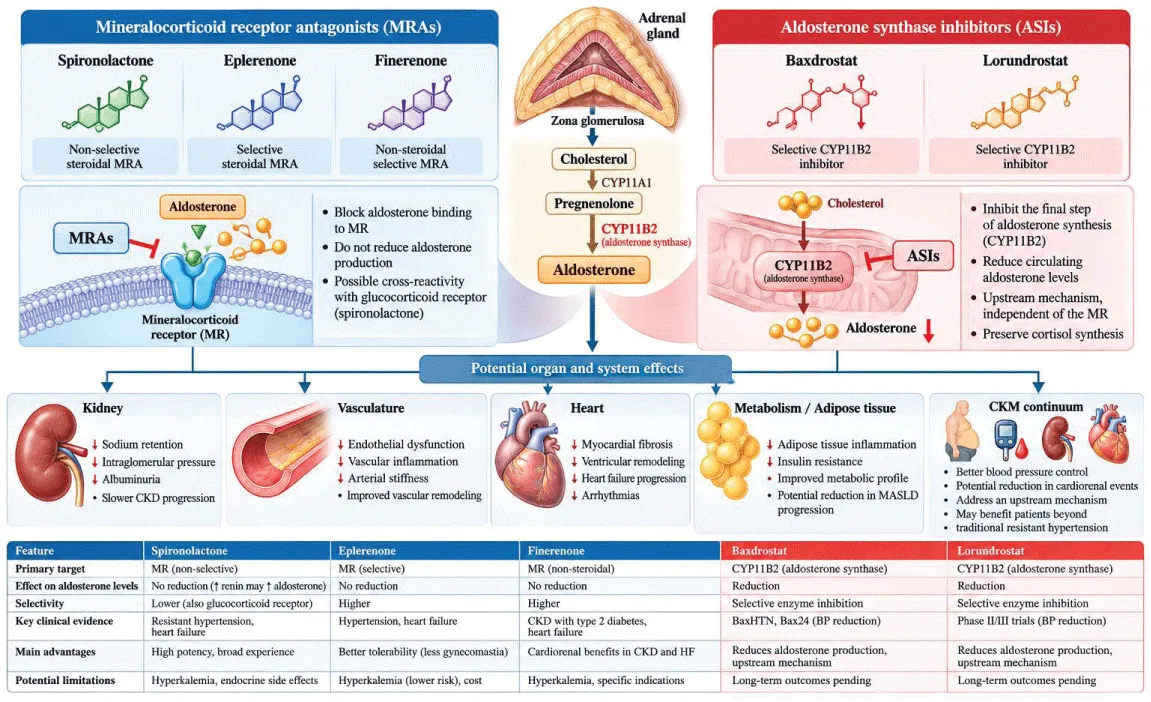
Figure 2: Mechanistic framework (author-created schematic). Obesity / visceral adiposity + salt sensitivity + CKD + diabetes → aldosterone dysregulation → [CYP11B2 / aldosterone synthesis] → circulating aldosterone → MR-mediated sodium retention, inflammation and fibrosis → uncontrolled BP and CKM target-organ injury. Intervention A: MRAs interrupt the pathway downstream at the receptor. Intervention B: selective ASIs interrupt it upstream at CYP11B2. Potential non-MR aldosterone effects and glucocorticoid-driven MR activity make these strategies mechanistically distinct; differential organ outcomes remain unproven.
A third group includes adults receiving two antihypertensive drugs with persistently elevated blood pressure, without meeting classical resistant-hypertension criteria. The BaxHTN and Launch-HTN designs underscore why this population deserves attention. The most appropriate moment for treatment escalation is not determined by an arbitrary medication count alone but by cardiovascular risk, adherence, baseline treatment quality, tolerability, and confirmed out-of-office blood pressure [12,15].
A fourth phenotype is treatment-limiting intolerance to spironolactone. Avoidance of gynecomastia and other antiandrogen effects is a credible pharmacological advantage of selective ASIs, although these drugs do not abolish potassium or kidney monitoring requirements. Such patients may represent a particularly rational clinical niche if relevant local approvals and reimbursement are available [4,31].
Finally, patients with clinically suspected primary aldosteronism should receive structured diagnostic evaluation rather than reflex treatment as ordinary essential hypertension. The 2025 Endocrine Society guideline emphasizes appropriate screening and consideration of subtype-directed treatment. Surgical cure in appropriately selected unilateral disease remains distinct from the experimental question of whether ASIs can improve long-term outcomes in primary aldosteronism [32].
Diagnostic assessment should ideally precede initiation of an ASI or an MRA when primary aldosteronism is suspected. Current guidance recommends measuring morning plasma aldosterone and renin and calculating the aldosterone-to-renin ratio (ARR), with attention to assay-specific thresholds, potassium status, sodium intake, renal function, and medications. Hypokalemia should be corrected before testing, because it can suppress aldosterone and yield a false-negative result. MRAs and epithelial sodium channel inhibitors may require withdrawal for approximately 4 weeks when clinically safe; other diuretics and renin–angiotensin agents also influence results, and an individualized minimal- or no-withdrawal strategy is sometimes preferable to unsafe drug interruption [32].
Both MRAs and ASIs can alter the renin–aldosterone axis and compromise subsequent ARR interpretation. MRAs commonly increase renin through reduced receptor signaling; ASIs directly suppress aldosterone and may increase renin, potentially lowering the ARR and masking autonomous aldosterone secretion. For newer selective ASIs, a validated diagnostic washout interval has not been established; an MRA-specific 4-week recommendation must not be presented as an evidence-based ASI washout rule. When feasible, obtain baseline biochemical samples before aldosterone-pathway treatment; if patients are already receiving such agents, interpret negative results cautiously and coordinate any medication adjustment with a hypertension/endocrine specialist [10,11,32].
When screening supports primary aldosteronism, decisions about confirmatory suppression testing and subtype evaluation should follow guideline-based pretest probability and shared decision-making. For patients considering surgery, adrenal imaging and, when indicated, adrenal venous sampling are used to distinguish surgically treatable unilateral from bilateral disease; unilateral adrenalectomy and disease-specific MRA therapy remain established options. The small historical LCI699 study provides proof of biochemical feasibility in primary aldosteronism, not evidence that contemporary selective ASIs replace etiologic diagnosis, adrenalectomy, or established long-term therapy. Larger, adequately controlled studies of modern ASIs in primary aldosteronism are still needed [11,32].
Contemporary ASI data in primary aldosteronism remain preliminary but extend beyond the early LCI699 experience. In an eight-week phase 2 study, 35 adults with primary aldosteronism assigned to dexfadrostat phosphate doses of 4, 8, or 12 mg had a mean reduction in 24-hour ambulatory systolic blood pressure of 10.7 mmHg from baseline and a marked decline in ARR; the trial did not establish superiority to standard disease-specific therapy. In the small phase 2a SPARK study (15 patients), baxdrostat reduced excess aldosterone, hypertension, and hypokalemia, but the limited sample and unresolved adrenal lateralization restrict interpretation of longer-term disease-specific benefit. The randomized phase 3 BaxPA trial (NCT07007793) is ongoing and is expected to provide stronger evidence on biochemical and blood-pressure responses. Until adequately powered comparative and outcome data become available, these findings support clinical investigation rather than bypassing primary aldosteronism subtype evaluation or established surgery/MRA options [33-35].
A practical sequence for clinicians
First, verify uncontrolled blood pressure with correct measurement technique and, where feasible, home or ambulatory monitoring. Review adherence, high sodium intake,
nonprescription agents, obesity, obstructive sleep apnea, CKD, and other secondary causes. Distinguish true resistant hypertension from incomplete therapeutic optimization and pseudoresistance. An attractive new pharmacological mechanism cannot substitute for careful diagnostic assessment [5,32].
Before selecting spironolactone, finerenone, or an ASI, assess the likelihood of primary aldosteronism and, whenever safely possible, obtain appropriately interpreted aldosterone and renin measurements before pathway-modifying therapy. Confirmed or strongly suspected disease warrants evaluation for subtype-directed therapy rather than empirical drug substitution alone [32].
Second, optimize foundational CKM management. Appropriate renin–angiotensin blockade, calcium-channel blocker therapy, and a thiazide-like diuretic remain central for many patients; weight reduction, dietary sodium restriction, physical activity, and targeted treatment of diabetes and CKD are complementary. SGLT2 inhibitors and disease-specific cardiorenal agents should be used for their established indications, rather than replaced by an ASI solely because an upstream mechanism seems broader [1,6,7].
Third, individualize aldosterone-pathway treatment. Spironolactone remains a benchmark for resistant hypertension when tolerated and safe. Eplerenone may be useful if endocrine intolerance is dominant. Finerenone has a specific role in selected cardiorenal disease. An approved selective ASI can be considered for inadequately controlled hypertension on other treatments, particularly if conventional options prove ineffective or poorly tolerated, with attention to eligibility and electrolyte risk [5-7,31].
Fourth, follow response and safety in parallel. Meaningful efficacy includes reproducible blood-pressure lowering, ideally confirmed out of office, together with symptom assessment and adherence. Safety requires potassium, sodium, and renal-function monitoring and medication reconciliation. Dose and follow-up intervals should track the specific drug label, kidney function, baseline electrolytes, concomitant medications, and local practice standards rather than a universal unvalidated algorithm [31] (Figure 3).
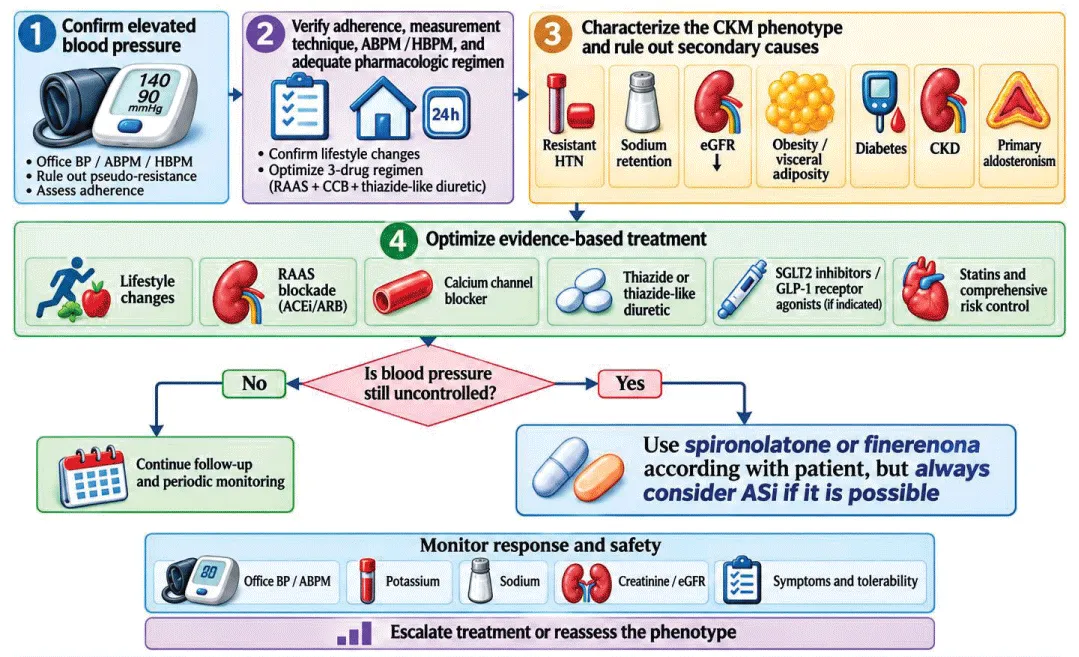
Figure 3: Proposed clinical decision pathway (hypothesis-generating) Confirm elevated BP → verify adherence / ABPM / adequate drug regimen → assess CKM phenotype, K+, Na+, eGFR and secondary causes → optimize evidence-based CKM therapy → consider MRA when indicated and tolerated OR locally authorized ASI in inadequately controlled BP → measure response and laboratory safety → escalate or reassess phenotype. This is an expert-proposed framework. If primary aldosteronism is suspected, obtain baseline ARR assessment and consider subtype-directed evaluation before starting aldosterone-pathway therapy whenever feasible and safe.
Why superiority is plausible—and why it is not yet proven
Four claims commonly support the hypothesis that synthesis inhibition might surpass receptor antagonism. First, upstream intervention lowers aldosterone availability rather than simply competing at MR. Second, CYP11B2 selectivity may avoid the androgenic and progestogenic receptor interactions responsible for some spironolactone adverse effects. Third, selective ASIs have robust short-term add-on blood-pressure efficacy in patients with both uncontrolled and resistant hypertension. Fourth, broader CKM biology creates a rationale for evaluating cardiac, vascular, and renal remodeling benefits beyond blood-pressure lowering. These are important strengths, but only the first three have direct support at the mechanistic or clinical surrogate-endpoint level [4,12-14].
Three critical counterarguments prevent a categorical superiority conclusion. There are no definitive head-to-head randomized trials showing an ASI lowers blood pressure more than optimal spironolactone, eplerenone, or finerenone within the same treatment framework. ASIs continue to cause hyperkalemia (although % it is reduced), and comparative differences in risk have not been reliably quantified. Most importantly, MRAs—particularly finerenone—have hard outcome evidence in CKD conditions that is not yet matched by mature ASI event-driven trials [5-7,19].
Likewise, claims that selective synthesis inhibition directly improves MASLD, decreases atherogenic lipoproteins, resolves adipose inflammation, or prevents atrial fibrillation would currently exceed randomized clinical evidence. These are hypotheses worth testing, especially because endocrine and metabolic mechanisms converge within CKM syndrome, but the language of the manuscript must respect the difference between pathophysiological plausibility and demonstrated patient benefit [3].
The research agenda should therefore prioritize active-comparator studies, stratified by renin–aldosterone phenotype and CKM stage; trials of ambulatory pressure and patient-reported tolerability; rigorous safety studies in moderate CKD and higher-potassium populations; and event-driven assessment of heart failure, kidney failure, myocardial infarction, stroke, and mortality. Biomarker studies should investigate aldosterone, renin, urinary albumin, natriuretic peptides, fibrosis indices, and vascular stiffness, while distinguishing mediation from association [4,19].
Implications for Mexico and other cardiometabolic health systems
Mexico offers a particularly compelling setting in which to evaluate aldosterone-targeted antihypertensive treatment within the cardiovascular–kidney–metabolic (CKM) continuum. In the nationally representative ENSANUT 2021–2024 analysis of 34,954 survey participants, the prevalence of hypertension among adults aged 20 years or older was 29.1% (95% confidence interval, 28.1%–30.2%), using a threshold of at least 140/90 mmHg or current antihypertensive medication. Prevalence was 31.6% in men and 27.0% in women and ranged from 20.7% in Colima to 40.6% in Sonora. Such marked heterogeneity argues against assuming equal clinical infrastructure, phenotype distribution, or medication access across the 32 federal entities (Figure 4) [36].
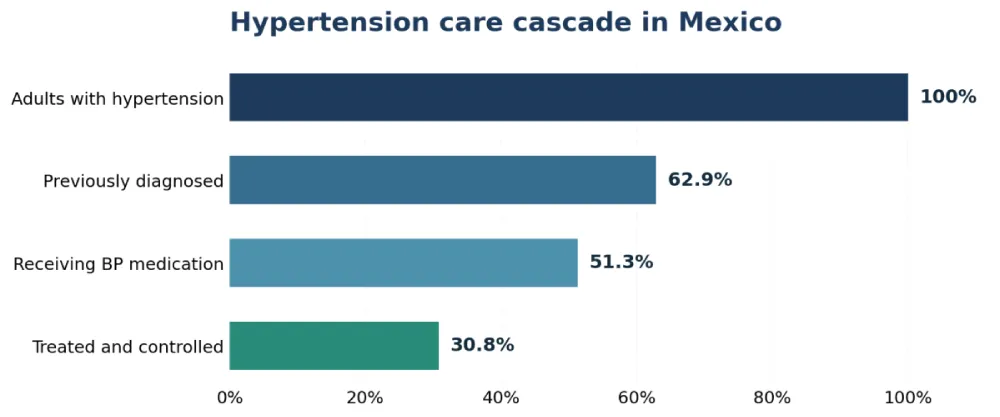
Figure 4: The Mexican hypertension care cascade (derived from ENSANUT 2021–2024). Bars show nested percentages of adults with hypertension, not percentages of all Mexican adults: 100% (hypertension), 62.9% (previously diagnosed), 51.3% (on medication, derived), and 30.8% (treated and controlled, derived). Control: <140/90 mmHg. This observational cascade is not an estimate of the effect of aldosterone synthase inhibitors [36].
Bars show nested percentages of adults with hypertension, not percentages of all Mexican adults: 100% (hypertension), 62.9% (previously diagnosed), 51.3% (on medication, derived), and 30.8% (treated and controlled, derived). Control: < 140/90 mmHg. This observational cascade is not an estimate of the effect of aldosterone synthase inhibitors [36].
Equally important is the cascade from diagnosis to effective treatment. In the ENSANUT analysis, 62.9% of hypertensive adults had previously been diagnosed; 81.6% of those with a diagnosis were taking antihypertensive medication; and only 60.1% of medicated individuals had blood pressure below 140/90 mmHg. Multiplying these nested conditional proportions suggests that approximately 30.8% of all people with hypertension were both treated and controlled, leaving almost seven in ten outside that category. This is a derived indicator, not an independently reported point estimate. Importantly, control assessed at a stricter, individually appropriate threshold of 130/80 mmHg would produce a different—and potentially larger—treatment gap [36].
To illustrate national scale, applying the 29.1% hypertension prevalence to the 83,255,149 adults aged 20 years or older enumerated in the ENSANUT 2023 population expansion produces approximately 24.23 million adults with hypertension. Applying the published conditional proportions yields about 15.24 million previously diagnosed, 12.43 million medicated, and 4.96 million medicated but uncontrolled adults. This is an intentionally simple cross-period extrapolation for health-system planning; it is not a measured 2026 census, a validated forecast, or a count of patients eligible for an aldosterone synthase inhibitor. Estimates shift with demographic growth, the blood-pressure threshold, missing data, medication adherence, and the definition of treatment resistance [36,37] (Table 3).
| Table 3: Mexico: epidemiological burden and illustrative implementation scenarios | ||
| Indicator / input | Mexico estimate | Evidence / interpretation |
| Adult hypertension, 2021–2024 | 29.1% | ENSANUT; threshold ≥140/90 mmHg or receiving medication [36] |
| Hypertension previously diagnosed | 62.9% of hypertension | ENSANUT care cascade [36] |
| On pharmacological treatment | 81.6% of diagnosed | Conditional denominator—not all adults with hypertension [36] |
| Controlled during pharmacological therapy | 60.1% of treated | Clinic BP <140/90 mmHg [36] |
| Obesity / type 2 diabetes | 38.9% / 17.0% | Separate population estimates; do not add [37,38] |
| CKD, modeled all ages in 2021 | ~9.2% | GBD 2021; not directly comparable with adult ENSANUT [39] |
| Illustrative total hypertension burden | ~24.23 million adults | 83.26m (2023) × 29.1% (2021–2024): cross-period extrapolation [36,37] |
| Illustrative treated but uncontrolled | ~4.96 million adults | 24.23m × 62.9% × 81.6% × 39.9%; not ASI eligibility [36,37] |
| Hypothetical ASI reach: 5% / 10% / 20% | ~0.25m / 0.50m / 0.99m | Scenarios only; no assumptions of eligibility or approval |
| Testing encounters: baseline plus one recheck | ~0.50m / 0.99m / 1.98m | Two assumed laboratory encounters per exposed patient |
| 10-year preventable CVD events if BP normalized | ~1.12 million | ENSANUT counterfactual for comprehensive BP control, NOT drug-specific [36] |
| Source: ENSANUT 2021–2024, ENSANUT 2023, GBD 2021 and explicitly labeled author calculations. Percentages use distinct denominators; implementation scenarios are illustrative rather than predictions. | ||
The overlapping CKM burden increases both the potential utility and complexity of an endocrine strategy. Mexico’s official ENSANUT 2023 adult estimates identified obesity in 38.9% of adults. The 2021–2024 national diabetes analysis found type 2 diabetes in 17.0%, including 5.4% previously undiagnosed. A separate Global Burden of Disease 2021 study estimated chronic kidney disease prevalence at 9,184.9 per 100,000 people (approximately 9.2%) across all ages; this model-based CKD measure should not be equated with a laboratory-confirmed adult estimate. Within the hypertension survey, hypertension prevalence was 36.7% among adults with obesity versus 17.6% among those with normal body mass index. These marginal prevalences cannot be summed to estimate the number of individuals with simultaneous hypertension, obesity, diabetes, and CKD [36-39].
The burden of inadequate control extends well beyond intermediate measurements. The ENSANUT investigators estimated that 1,119,060 cardiovascular events might be avoided over the next decade in a counterfactual scenario where blood pressure is normalized across the adult population. Separately, a published 2026 Mexican cost-of-illness model, which combined survey data, external treatment-resistance assumptions, and official hospitalization unit costs, projected about 1.84 million individuals with apparent treatment-resistant hypertension and 1.29 million with true resistant hypertension, with an estimated MXN 1.08 billion in incremental hospitalization costs attributable to true resistance each year. These latter quantities are modeled, not nationally observed counts or invoices; neither estimate can be interpreted as the benefit or cost saving of a specific CYP11B2 inhibitor [36,40].
An illustrative implementation exercise clarifies the difference between clinical need and drug-market eligibility. If the approximately 4.96 million pharmacologically treated yet uncontrolled adults were used solely as a broad planning denominator, a hypothetical program reaching 5%, 10%, or 20% of this group would involve roughly 248,000, 496,000, or 992,000 people, respectively. These reach scenarios represent neither prescribing forecasts nor appropriate ASI candidates: diagnosis confirmation, optimized foundational therapy, potassium and sodium concentration, kidney function, concomitant renin–angiotensin or mineralocorticoid therapy, availability, and affordability would all narrow the eligible subset. Even one baseline and one subsequent electrolyte/renal-function panel per exposed patient would require approximately 0.50, 0.99, or 1.98 million testing encounters, respectively, before additional follow-up is considered [36,37].
The clinical impact should be evaluated against the general causal evidence for blood-pressure reduction, not inferred directly from the drug mechanism. Individual-participant trial meta-analysis suggests that a sustained 5-mmHg systolic reduction is associated with approximately a 10% relative reduction in major cardiovascular events with blood-pressure-lowering treatment. Nevertheless, applying that class-agnostic relative effect to 12-week ASI trials to calculate Mexican myocardial infarctions, strokes, heart-failure admissions, or deaths prevented would require unverified assumptions about durability, uptake, baseline absolute event risk, adherence, and safety. A Mexican ASI value assessment should compare net incremental blood-pressure control, laboratory adverse events, quality-adjusted survival, and total costs with optimized low-cost regimens and MRAs—not with placebo alone [12,13,41].
For Mexico, a credible translational pathway would pair phenotype-based treatment with implementation research: standardized office and home blood-pressure protocols, screening for primary aldosteronism when indicated, assessment of albuminuria and estimated glomerular filtration, documented dietary sodium exposure, and structured follow-up for hyperkalemia, hyponatremia, and kidney dysfunction. Prospective multicenter cohorts should recruit beyond tertiary referral hospitals and measure urban–rural equity, persistence, out-of-pocket expenditure, and clinician capacity for biochemical monitoring. A pragmatic active-comparator trial of an ASI strategy versus optimized spironolactone-based care in appropriately selected CKM phenotypes, supported by a prespecified economic evaluation, would be more informative to Mexican decision-makers than cross-trial claims of therapeutic superiority [31,32,36].
Unresolved mechanistic and translational questions
The distinction between ligand suppression and receptor inhibition creates opportunities for precision medicine that have not yet been settled by clinical trials. In low-renin hypertension, aldosterone may be inappropriately high relative to the underlying renin and sodium status even when the absolute plasma concentration is not strikingly elevated. A binary definition of hyperaldosteronism may therefore fail to identify biologically susceptible patients. A useful translational trial would measure renin, aldosterone, urinary sodium, potassium handling, and ambulatory blood pressure serially, while prespecifying interactions between baseline endocrine phenotype and treatment. Such designs could reveal whether the effectiveness of an ASI depends on hormone excess, salt sensitivity, or both [2,4].
A related question concerns aldosterone escape during chronic renin–angiotensin system inhibition. In some patients, aldosterone concentrations rise after an initial reduction despite continued therapy. By directly targeting CYP11B2, an ASI may provide a pharmacological strategy that does not depend exclusively on suppression of angiotensin II activity. Yet adrenal regulation is multifactorial, and neither complete nor stable hormone elimination should be assumed. Longitudinal suppression, adherence, pharmacokinetic variation, and rebound after withdrawal should be assessed under realistic treatment conditions [4,9].
In patients with obesity, the interdependence of aldosterone secretion and adipose dysfunction is particularly provocative. Weight loss and contemporary incretin-based therapy may improve blood pressure through reductions in adiposity, altered renal sodium handling, and decreased neurohormonal stimulation. Whether an ASI offers additional metabolic benefit after substantial weight reduction, or whether adiposity treatment reduces the requirement for an ASI, is unknown. Factorial or sequential randomized trials could distinguish independent from overlapping pathways. Importantly, an effect on blood pressure cannot be interpreted as proof of improved insulin sensitivity, hepatic steatosis, or long-term weight control [3].
Mechanistic imaging offers another opportunity. Echocardiographic assessment of left ventricular mass and diastolic function, cardiac magnetic resonance measures of extracellular volume or myocardial fibrosis, and validated measures of arterial stiffness could be integrated into focused studies. These tests may identify early remodeling signals even before major clinical events accumulate. Still, favorable remodeling biomarkers should remain secondary evidence; they are not substitutes for hospitalization, kidney failure, stroke, myocardial infarction, or mortality outcomes. Patient-oriented benefits such as exercise capacity and quality of life deserve similarly careful evaluation [4].
Biological heterogeneity also warrants attention to sex, age, and ethnicity. The endocrine adverse-effect profile of spironolactone creates a plausible sex-specific difference in acceptability; the potassium risk of ASIs may vary with kidney reserve and concomitant medication. Advanced age introduces orthostatic symptoms and volume-related susceptibility, whereas young patients with very high baseline pressure may require prolonged exposure over a lifetime. Generalizability will depend on recruitment that includes older adults, women, participants with different ancestries, and patients with common CKM comorbidities rather than a narrow trial population [12-14].
Safety science must advance alongside efficacy. Protocols should systematically evaluate serum potassium trajectories rather than focusing only on a single extreme threshold. They should also collect sodium, renal function, symptomatic hypotension, dehydration, drug interactions, and reasons for discontinuation. In patients with CKD, an early fall in estimated filtration can reflect hemodynamic adjustment, but an individual patient may also have true acute kidney injury; the distinction requires clinical assessment and serial measurements. Comparative studies should test whether differences in laboratory events translate into adherence, persistence, and quality-of-life gains [12,13,31].
Finally, therapeutic success requires delivery systems as well as molecular innovation. Home monitoring programs, simplified prescriptions, laboratory access, and longitudinal clinical follow-up are prerequisites for safely introducing a new endocrine therapy. Cost-effectiveness modeling should incorporate drug acquisition, monitoring visits, severe electrolyte events, avoided hypertension-related complications, and local healthcare costs. Real-world comparative effectiveness will be especially important where resources constrain access to ambulatory blood-pressure monitoring or laboratory testing. The strongest precision medicine approach is not merely prescribing a targeted drug; it is matching an evidence-supported intervention to an accurately defined clinical phenotype and ensuring that the treatment remains safe and accessible [1,31].
Evidence hierarchy and interpretation
Interpretation requires clarity about the question each type of evidence can answer. A placebo-controlled blood-pressure trial demonstrates pharmacological antihypertensive activity in the enrolled population, not superiority over another active intervention. An indirect meta-analysis may permit hypothesis-generating comparisons if populations and treatment backgrounds are sufficiently similar, but estimates remain vulnerable to between-study heterogeneity and treatment-network sparsity. A biochemical experiment confirms target engagement, not that the intervention prevents myocardial infarction or kidney failure. Event-driven randomized trials are the appropriate standard for concluding that one aldosterone-pathway strategy improves prognosis beyond another [5-7,12-14,19].
There is also a distinction between a molecule’s mechanism and the position it should occupy in a therapeutic sequence. A new ASI may be mechanistically elegant but still provide less net benefit than an established therapy for a person whose predominant clinical need is prevention of heart failure hospitalization or progressive kidney disease. Conversely, in an individual whose chief problem is persistent systolic hypertension despite an appropriate multidrug regimen and who cannot tolerate a steroidal MRA, the net clinical value of an ASI may be substantial even before hard-outcome superiority is established. Such decisions should weigh indication, drug access, electrolyte risk, prior adverse effects, treatment preferences, and monitoring feasibility [4-7,31].
This distinction is the defining editorial position of the present review: CYP11B2 inhibitors are not simply “new spironolactone.” They modulate a different point in the endocrine pathway, create a credible option earlier in the uncontrolled-hypertension continuum, and introduce new research opportunities across CKM phenotypes. Nevertheless, recognizing a mechanistic advance does not require overstating evidence. The most durable scientific argument is that selective inhibition of aldosterone synthesis expands precision treatment while definitive head-to-head and event-driven studies determine whether it ultimately changes the standard of care.
Selective inhibition of aldosterone synthase marks a genuine expansion of antihypertensive pharmacology. By targeting CYP11B2, newer agents offer upstream endocrine modulation and consistent additional blood-pressure reduction across uncontrolled and resistant hypertension. Baxdrostat has now progressed from compelling randomized data to US regulatory approval for adjunctive treatment of inadequately controlled hypertension. Lorundrostat provides independent class-supporting trial evidence. These advances are especially relevant in the CKM era, where metabolic and kidney dysfunction intersect with aldosterone-related sodium retention and cardiovascular injury [12-15,31].
The appropriate message is ambitious but measured: selective ASIs may be preferable in selected patients because of their upstream mechanism, efficacy, and potential avoidance of steroidal endocrine adverse effects, yet direct clinical superiority over MRAs and improved hard cardiorenal outcomes remain unproven. Precision treatment will emerge not from replacing one class wholesale, but from identifying which CKM phenotypes benefit most from synthesis inhibition, receptor antagonism, or a carefully evaluated sequence of both approaches [4-7]. In Mexico, the principal near-term public-health opportunity is to improve detection and sustained control among millions already exposed to elevated pressure; selective CYP11B2 inhibitors may become a useful targeted component of that response but cannot substitute for essential hypertension-care infrastructure [36,41].
High-Impact Key Messages
- A Paradigm Shift: From Blocking Aldosterone Action to Suppressing Its Production. ASIs, potentially addressing biological effects beyond conventional receptor blockade.
- Powerful Blood Pressure Reduction: Phase 3 Evidence Changes the Therapeutic Landscape. Systolic blood pressure reductions of 8.7–9.8 mmHg with baxdrostat.
- Beyond Resistant Hypertension: A New Opportunity for Earlier Intervention. ASIs can also improve blood pressure in patients inadequately controlled despite two or more medications.
- Aldosterone as a Biological Link Across the Cardiovascular–Kidney–Metabolic Continuum.
- A Differentiated Endocrine Strategy—But Not a Risk-Free Alternative. It requires individualized selection and systematic biochemical surveillance.
- Beyond Competition: ASIs and MRAs May Have Distinct, Complementary Roles.
- From Molecular Innovation to Population Impact: A Major Opportunity for Mexico. Approximately 29.1% of adults have hypertension, and an illustrative national extrapolation suggests nearly 5 million treated adults remain uncontrolled.
Central Take-Home Message
“Aldosterone synthase inhibition is more than another antihypertensive drug class: it represents a shift from receptor blockade to upstream endocrine intervention, opening a new frontier in precision treatment of uncontrolled hypertension across the cardiovascular–kidney–metabolic continuum.”
- Ndumele CE, Rangaswami J, Chow SL, Neeland IJ, Tuttle KR, Khan SS, et al. Cardiovascular-kidney-metabolic health: a presidential advisory from the American Heart Association. Circulation. 2023;148(20):1606-1635. Available from: https://dx.doi.org/10.1161/CIR.0000000000001184.
- Zeitler E, Klein KR, Lingvay I, Pick A, Billings LK. Hyperaldosteronism in the pathophysiology and management of cardiovascular-kidney-metabolic syndrome. Diabetes Obes Metab. 2026;28(7):5463-5475. Available from: https://dx.doi.org/10.1111/dom.70781.
- Sato A, Nishimoto M. Aldosterone synthase inhibitors: a new option for antihypertensive, cardio-renal protection. Hypertens Res. 2026;49:2190-2200. Available from: https://dx.doi.org/10.1038/s41440-026-02671-z.
- Rossi GP, Rossi FB, Cignarella A, Seccia TM. Aldosterone synthase inhibitors for the treatment of cardiovascular disease. Nat Rev Endocrinol. 2026;22(9):543-553. Available from: https://dx.doi.org/10.1038/s41574-026-01259-4.
- Williams B, MacDonald TM, Morant S, Webb DJ, Sever P, McInnes G, et al. Spironolactone versus placebo, bisoprolol, and doxazosin to determine the optimal treatment for drug-resistant hypertension (PATHWAY-2): a randomised, double-blind, crossover trial. Lancet. 2015;386(10008):2059-2068. Available from: https://dx.doi.org/10.1016/S0140-6736(15)00257-3.
- Bakris GL, Agarwal R, Anker SD, Pitt B, Ruilope LM, Rossing P, et al. Effect of finerenone on chronic kidney disease outcomes in type 2 diabetes. N Engl J Med. 2020;383(23):2219-2229. Available from: https://dx.doi.org/10.1056/NEJMoa2025845.
- Solomon SD, McMurray JJV, Vaduganathan M, Claggett B, Jhund PS, Desai AS, et al. Finerenone in heart failure with mildly reduced or preserved ejection fraction. N Engl J Med. 2024;391(16):1475-1485. Available from: https://dx.doi.org/10.1056/NEJMoa2407107.
- Baethge C, Goldbeck-Wood S, Mertens S. SANRA—a scale for the quality assessment of narrative review articles. Res Integr Peer Rev. 2019;4:5. Available from: https://dx.doi.org/10.1186/s41073-019-0064-8.
- Surma S, Narkiewicz K. Aldosterone synthase inhibitors: biological rationale, mechanism of action, and results of clinical trials. Am J Hypertens. 2026;39(Suppl 1):S18-S29. Available from: https://dx.doi.org/10.1093/ajh/hpag087.
- Calhoun DA, White WB, Krum H, Guo W, Bermann G, Trapani A, et al. Effects of a novel aldosterone synthase inhibitor for treatment of primary hypertension: results of a randomized, double-blind, placebo- and active-controlled phase 2 trial. Circulation. 2011;124(18):1945-1955. Available from: https://dx.doi.org/10.1161/CIRCULATIONAHA.111.029892.
- Amar L, Azizi M, Menard J, Peyrard S, Watson C, Plouin PF. Aldosterone synthase inhibition with LCI699: a proof-of-concept study in patients with primary aldosteronism. Hypertension. 2010;56(5):831-838. Available from: https://dx.doi.org/10.1161/HYPERTENSIONAHA.110.157271.
- Flack JM, Azizi M, Brown JM, Dwyer JP, Fronczek J, Jones ESW, et al. Efficacy and safety of baxdrostat in uncontrolled and resistant hypertension. N Engl J Med. 2025;393:1363-1374. Available from: https://dx.doi.org/10.1056/NEJMoa2507109.
- Azizi M, Brown JM, Dwyer JP, Flack JM, Jones ESW, Kurlyandskaya R, et al. Effect of baxdrostat on ambulatory blood pressure in patients with resistant hypertension (Bax24): a phase 3, randomised, double-blind, placebo-controlled trial. Lancet. 2026;407(10532):988-999. Available from: https://dx.doi.org/10.1016/S0140-6736(25)02549-8.
- Laffin LJ, Kopjar B, Melgaard C, Wolski K, Ibbitson J, Bhikam S, et al. Lorundrostat efficacy and safety in patients with uncontrolled hypertension. N Engl J Med. 2025;392(18):1813-1823. Available from: https://dx.doi.org/10.1056/NEJMoa2501440.
- Saxena M, Laffin L, Borghi C, Fernandez Fernandez B, Ghali JK, Kopjar B, et al. Lorundrostat in participants with uncontrolled hypertension and treatment-resistant hypertension: the Launch-HTN randomized clinical trial. JAMA. 2025;334(5):409-418. Available from: https://dx.doi.org/10.1001/jama.2025.9413.
- Freeman MW, Halvorsen YD, Marshall W, Pater M, Isaacsohn J, Pearce C, et al. Phase 2 trial of baxdrostat for treatment-resistant hypertension. N Engl J Med. 2023;388(5):395-405. Available from: https://dx.doi.org/10.1056/NEJMoa2213169.
- American College of Cardiology. Efficacy and safety of baxdrostat in patients with uncontrolled hypertension—HALO [Internet]. Washington (DC): American College of Cardiology; 2023 [cited 2026 Nov 5]. Available from: https://www.acc.org/latest-in-cardiology/clinical-trials/2023/03/01/23/34/halo
- Laffin LJ, Rodman D, Luther JM, Vaidya A, Weir MR, Rajicic N, et al. Aldosterone synthase inhibition with lorundrostat for uncontrolled hypertension: the Target-HTN randomized clinical trial. JAMA. 2023;330(12):1140-1150. Available from: https://dx.doi.org/10.1001/jama.2023.16029.
- Tsou YL, Wang YH, Lin YS, Chen CL. Comparative efficacy of aldosterone-related sodium-retention pathway therapies for resistant hypertension: a drug-level network meta-analysis of randomized controlled trials. J Clin Hypertens (Greenwich). 2026;28(9):e70365. Available from: https://dx.doi.org/10.1111/jch.70365.
- Weir MR, Bhaduri S, Lee K, Galvez O, Kooienga L, Kopjar B, et al. Results from the phase 2 Explore-CKD trial of lorundrostat, a novel aldosterone synthase inhibitor, in participants with uncontrolled hypertension, chronic kidney disease, and albuminuria. Kidney Int. 2026 Sep 23:S0085-2538(26)00808-2. Online ahead of print. Available from: https://dx.doi.org/10.1016/j.kint.2026.08.021.
- Tuttle KR, Hauske SJ, Canziani ME, Caramori ML, Cherney DZ, Cronin L, et al. Efficacy and safety of aldosterone synthase inhibition with and without empagliflozin for chronic kidney disease: a randomised, controlled, phase 2 trial. Lancet. 2024;403(10424):379-390. Available from: https://dx.doi.org/10.1016/S0140-6736(23)02408-X.
- AstraZeneca. Phase IIb study of baxdrostat with dapagliflozin for albuminuria in chronic kidney disease (NCT07222917) [Internet]. ClinicalTrials.gov; 2026 [cited 2026 Nov 5]. Available from: https://clinicaltrials.gov/study/NCT07222917
- AstraZeneca. Phase III study of baxdrostat plus dapagliflozin for chronic kidney disease progression (NCT06268873) [Internet]. ClinicalTrials.gov; 2026 [cited 2026 Nov 5]. Available from: https://clinicaltrials.gov/study/NCT06268873
- Goh JS, Sohail S, Ayub H, Cheema ZZ, Paray NB, Adikari S, et al. Efficacy and safety of aldosterone synthase inhibitors in hypertension: a systematic review and meta-analysis. Endocrinol Diabetes Metab. 2025;8(5):e70094. Available from: https://dx.doi.org/10.1002/edm2.70094.
- Queiroga F, Araujo B, Rivera A, Consoli L, Ujjawal A, Mansouri ES, et al. Second-generation aldosterone synthase inhibitors for hypertension: a Bayesian meta-analysis of randomized trials. JACC Adv. 2026;5(3):102621. Available from: https://dx.doi.org/10.1016/j.jacadv.2026.102621.
- Yusuf IA, Badero OJ, Ihesiulo A, Okwah MN, Oshodin A, Asikong E. Aldosterone synthase inhibitors in uncontrolled and resistant hypertension: a phenotype-stratified systematic review and network meta-analysis of randomized trials. PLoS One. 2026;21(6):e0349932. Available from: https://dx.doi.org/10.1371/journal.pone.0349932.
- AstraZeneca. BaxDuo-Pacific: phase III renal outcomes and cardiovascular mortality study of baxdrostat plus dapagliflozin in chronic kidney disease and hypertension (NCT06742723) [Internet]. ClinicalTrials.gov; 2026 [cited 2026 Nov 5]. Available from: https://clinicaltrials.gov/study/NCT06742723
- Boehringer Ingelheim. EASi-KIDNEY: vicadrostat (BI 690517) plus empagliflozin in chronic kidney disease (NCT06531824) [Internet]. ClinicalTrials.gov; 2026 [cited 2026 Nov 5]. Available from: https://clinicaltrials.gov/study/NCT06531824
- Boehringer Ingelheim. Phase III study of vicadrostat with empagliflozin in heart failure with ejection fraction 40% or higher (NCT06424288) [Internet]. ClinicalTrials.gov; 2026 [cited 2026 Nov 5]. Available from: https://clinicaltrials.gov/study/NCT06424288
- Boehringer Ingelheim. EASi-PROTKT: vicadrostat plus empagliflozin in type 2 diabetes, hypertension, and cardiovascular disease (NCT07064473) [Internet]. ClinicalTrials.gov; 2026 [cited 2026 Nov 5]. Available from: https://clinicaltrials.gov/study/NCT07064473
- US Food and Drug Administration. BAXFENDY (baxdrostat) tablets: prescribing information [Internet]. Silver Spring (MD): US Food and Drug Administration; 2026 [cited 2026 Nov 5]. Available from: https://www.accessdata.fda.gov/drugsatfda_docs/label/2026/219878Orig1s000lbl.pdf
- Adler GK, Stowasser M, Correa RR, Khan N, Kline G, McGowan MJ, et al. Primary aldosteronism: an Endocrine Society clinical practice guideline. J Clin Endocrinol Metab. 2025;110(9):2453-2495. Available from: https://dx.doi.org/10.1210/clinem/dgaf284.
- Mulatero P, Wuerzner G, Groessl M, Sconfienza E, Damianaki A, Forestiero V, et al. Safety and efficacy of once-daily dexfadrostat phosphate in patients with primary aldosteronism: a randomised, parallel group, multicentre, phase 2 trial. EClinicalMedicine. 2024;71:102576. Available from: https://dx.doi.org/10.1016/j.eclinm.2024.102576.
- Turcu AF, Freeman MW, Bancos I, Ben-Shlomo A, Hamidi O, Hamrahian AH, et al. Phase 2a study of baxdrostat in primary aldosteronism. N Engl J Med. 2025;393(5):515-518. Available from: https://dx.doi.org/10.1056/NEJMc2508629.
- AstraZeneca. BaxPA: a randomized, double-blind, placebo-controlled phase 3 study of baxdrostat in primary aldosteronism (NCT07007793) [Internet]. ClinicalTrials.gov; 2026 [cited 2026 Nov 5]. Available from: https://clinicaltrials.gov/study/NCT07007793
- Campos-Nonato I, Monterrubio-Flores E, Ramírez-Villalobos D, Arias-Mendoza MA, Gómez-Álvarez E, Alcocer-Díaz-Barreiro L, et al. Hipertensión arterial en adultos y brechas de atención a nivel nacional y estatal, Ensanut 2021-2024. Salud Publica Mex. 2025;67(6):633-643. Available from: https://dx.doi.org/10.21149/17102.
- Secretaría de Salud. Programa Sectorial de Salud 2025-2030. Diario Oficial de la Federación [Internet]. Mexico City: Secretaría de Salud; 2025 [cited 2026 Oct 24]. Available from: https://sidof.segob.gob.mx/notas/docFuente/5767240
- Reyes-García A, Basto-Abreu A, Reyes-Sánchez F, Stern D, Romero-Martínez M, Campos-Nonato I, et al. Prevalencia de diabetes y control glucémico en México, Ensanut 2021-2024. Salud Publica Mex. 2025;67(6):622-632. Available from: https://dx.doi.org/10.21149/17286.
- Argaiz ER, Morales-Juárez L, Razo C, Ong L, Rafferty Q, Rincón-Pedrero R, et al. La carga de enfermedad renal crónica en México. Análisis de datos basado en el estudio Global Burden of Disease 2021. Gac Med Mex. 2023;159(6):501-508. Available from: https://dx.doi.org/10.24875/GMM.23000393.
- Rosas-Peralta M, Palomo-Piñón S, Alcocer L, Galván-Oseguera H, Chávez-Mendoza A, Cardona-Muñoz E, et al. The disease burden and economic impact of difficult-to-control and resistant hypertension in Mexico: a model-based national estimate of direct and indirect costs and 5- and 20-year projections. Ann Clin Hypertens. 2026;10(1):40-51. Available from: https://www.clinhypertensionjournal.com/ach/article/view/ach-aid1047
- Blood Pressure Lowering Treatment Trialists’ Collaboration. Pharmacological blood pressure lowering for primary and secondary prevention of cardiovascular disease across different levels of blood pressure: an individual participant-level data meta-analysis. Lancet. 2021;397(10285):1625-1636. Available from: https://dx.doi.org/10.1016/S0140-6736(21)00590-0.